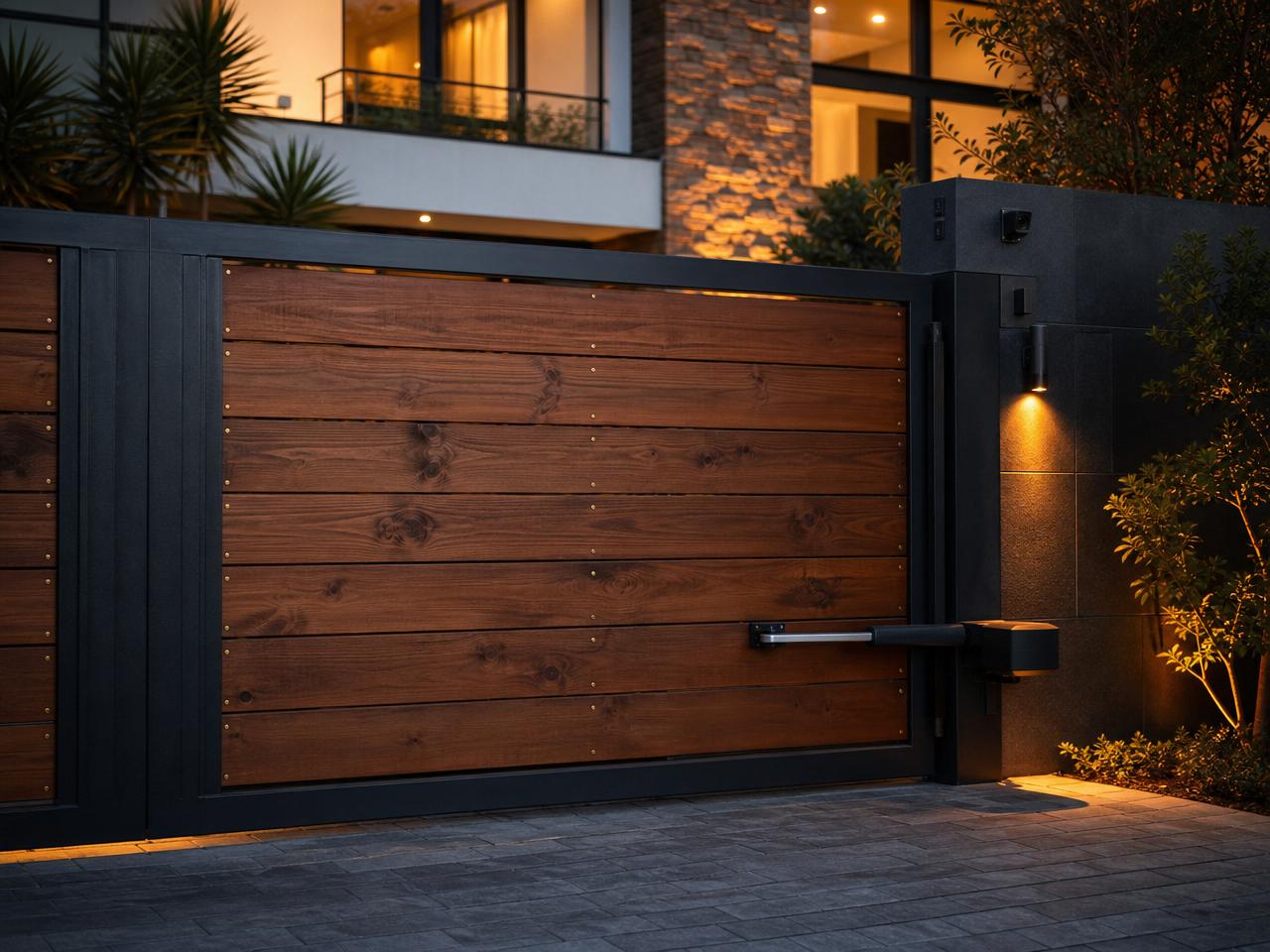
A gate that opens partway and reverses. Nine times in ten this is the safety beams doing exactly what they were designed to do — a dirty lens, a spider in the housing, or a bracket knocked out of line by a delivery van. It is the cheapest fault we attend and the one most often quoted elsewhere as a dying motor.
A motor that hums but does not move. Power is reaching it and drive is not reaching the gate: a sheared pinion, a stripped nylon gear, or a rack that has worked loose on a slider; the arm or its mounting on a swing gate. A part rather than a replacement, and both are covered under sliding gate repairs and swing gate repairs.
A gate that has become slow, or that labours through the same section every time. Look at the track before the electronics. Grit, a flattened wheel, a bent rail or a gate that has dropped on its hinges all make the motor work far harder than it was specified for.
A remote that has lost its range. A receiver drifting out of code, a corroded aerial, or a transmitter that has taken one drop too many. Almost always cheaper than people expect.
And a gate that does nothing at all. Mains, fuse, controller, in that order — if the board lights are dark, the fault is upstream of anything anybody wants to sell you.